


PRINCE2 vs AgilePM: Which Project Management Method Should You Choose?
.svg)
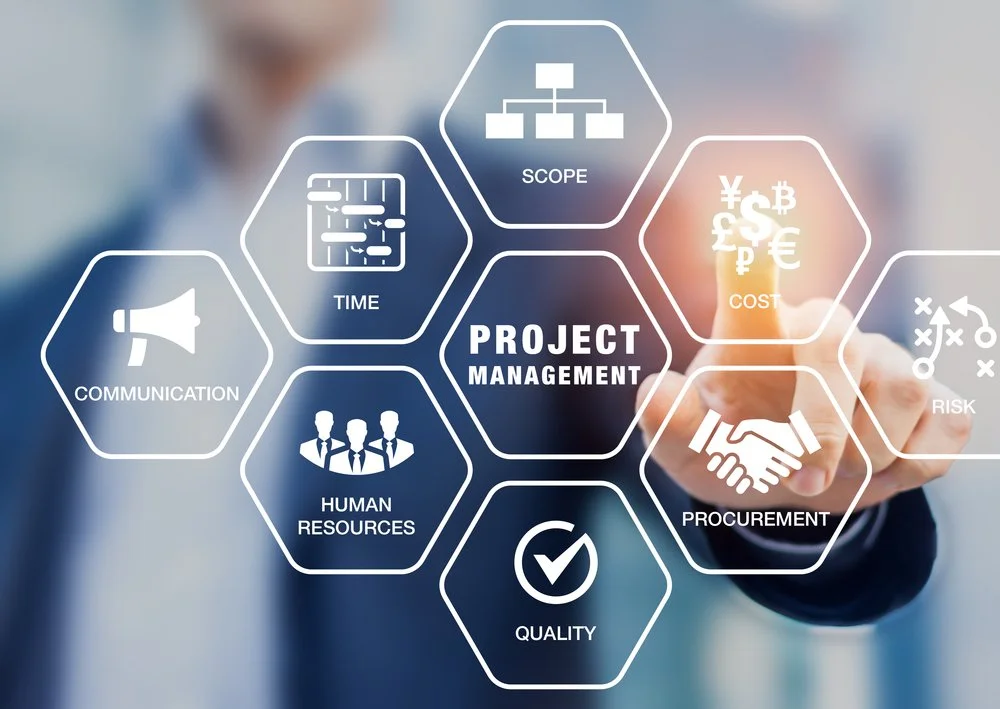
PRINCE2 and AgilePM are both structured approaches to project management, but they start from different places. PRINCE2 is a universal project management method designed to provide governance, control and clear responsibilities across many types of project. AgilePM is an agile project management framework designed around iterative delivery, collaboration, adaptability and frequent delivery of business value.
Neither is automatically better. The most suitable choice depends on how your organisation manages projects, how much change you expect during delivery, the level of governance required and whether you want an approach built around agile delivery from the outset.
There is also more overlap than the names may suggest. The current PRINCE2 Project Management Version 7 is designed to work with agile, waterfall and hybrid delivery approaches, while AgilePM Version 3 combines agile ways of working with defined roles, governance and a structured project lifecycle.
PRINCE2 vs AgilePM at a glance
- PRINCE2: a universal project management method with strong emphasis on governance, business justification, defined responsibilities, management by stages and tailoring.
- AgilePM: an agile project management framework built around adaptability, iterative delivery, collaboration, empowered teams and value-focused delivery.
- PRINCE2 suits: organisations that want a consistent governance method that can support different delivery approaches.
- AgilePM suits: organisations and teams that want project management to be agile by design rather than adding agile delivery techniques to a broader governance method.
- Both: can provide structure, defined responsibilities, project control and recognised Foundation and Practitioner certification pathways.
What is PRINCE2?
PRINCE2 is a structured project management method used to organise, direct and control projects. The current Version 7 is built around seven principles, seven practices and seven processes, with additional emphasis on people, communication, sustainability, digital and data management and tailoring.
One of PRINCE2's main strengths is that it separates project management from the detailed method used to create the project's products or deliverables. This means the governance structure can be used with predictive, iterative, incremental, agile or hybrid delivery approaches.
PRINCE2 provides guidance on questions such as:
- Why should the project continue?
- Who is accountable for each decision?
- How should the project be divided into manageable stages?
- How much authority should be delegated?
- How should risk, quality, issues, plans and progress be controlled?
- When should problems be escalated?
- How should the method be tailored to suit the project's circumstances?
That makes PRINCE2 particularly useful where organisations need clear governance, reporting and decision-making across projects of different types.
If you are considering this route, our recent guide to PRINCE2 Foundation vs Practitioner explains the two qualification levels in more detail.
What is AgilePM?
AgilePM is an agile project management framework developed by the Agile Business Consortium and based on the DSDM Agile Project Framework. It aims to combine the adaptability associated with agile working with the governance and control needed to manage projects professionally.
AgilePM Version 3 places strong emphasis on value-driven delivery, people and leadership, Scrum integration, multi-team environments and managing risk as part of the overall approach.
Typical AgilePM concepts include:
- iterative and incremental delivery
- frequent collaboration with business stakeholders
- prioritising requirements using MoSCoW
- timeboxing work
- protecting time, cost and quality while allowing lower-priority scope to flex
- empowered, collaborative teams
- clear lifecycle phases and defined responsibilities
- delivering usable business value progressively rather than waiting until the end of the project
AgilePM is therefore more than simply adding stand-ups or sprints to conventional project management. It provides an end-to-end project framework designed around agile principles.
ExperTrain offers Agile Project Management Foundation as an introduction to the framework, together with a combined Agile Project Management Foundation and Practitioner route for those who want to progress through both levels.
What is the biggest difference between PRINCE2 and AgilePM?
The biggest difference is the starting assumption about how the project will be delivered.
PRINCE2 provides a governance and management method that can accommodate different delivery approaches. It does not require every project team to work in the same way. A PRINCE2 project could use agile product delivery, a predictive approach, or a combination of the two.
AgilePM starts with agile delivery as part of the framework itself. The project lifecycle, roles, prioritisation techniques and working practices are designed around collaboration, iterative development and responsiveness to change.
A useful shorthand is:
- PRINCE2 asks: how should this project be governed and controlled?
- AgilePM asks: how can we govern and deliver this project effectively in an agile way?
That distinction is simplified, but it explains why organisations can legitimately choose either approach depending on what they need.
Is PRINCE2 still relevant for agile projects?
Yes. It is a common misconception that PRINCE2 is inherently a waterfall method. The current Version 7 explicitly supports different delivery methods and is designed to be tailored to the project's context.
PeopleCert describes PRINCE2 7 as compatible with agile, Lean and other approaches, and the method places more emphasis than previous versions on flexibility, people and adapting the method to suit the project.
This means an organisation can use PRINCE2 governance while delivery teams use agile practices. The important question is whether that combination provides enough practical agile guidance for the people doing the work. In some environments it will; in others, teams may benefit from a dedicated agile framework such as AgilePM.
How do PRINCE2 and AgilePM handle change?
Both recognise that projects change, but AgilePM is designed around the expectation that detailed requirements may evolve during delivery.
AgilePM commonly uses MoSCoW prioritisation to distinguish Must Have, Should Have, Could Have and Won't Have This Time requirements. This helps teams protect essential outcomes while allowing less important scope to move when necessary.
PRINCE2 controls change through its governance structure, tolerances, issue management and decision-making responsibilities. Version 7 can be tailored for environments where change is frequent, including agile projects, but the method does not prescribe one particular agile requirements technique.
If requirements are expected to evolve continuously and collaborative prioritisation is central to delivery, AgilePM may feel more natural. If change needs to be managed within a broader governance framework across many different project types, PRINCE2 may provide greater organisational consistency.
How do the approaches differ on planning?
PRINCE2 uses plans at appropriate management levels and manages projects in stages. Plans are used for communication, control and decision-making, and the amount of detail should be tailored to the project.
AgilePM also plans, but agile planning is expected to evolve as understanding develops. High-level direction and deadlines can remain controlled while detailed work is refined through shorter delivery cycles.
This is an important point because agile does not mean 'no planning'. AgilePM still needs clear objectives, governance, prioritisation, responsibilities and visibility of progress. The difference is that teams avoid pretending they can define every detail accurately at the start when the project contains uncertainty.
Which approach offers stronger governance?
PRINCE2 is usually the more obvious choice when formal governance across the organisation is the primary requirement. It defines management responsibilities clearly and provides mechanisms such as business justification, management stages, tolerances and escalation by exception.
AgilePM also includes governance and defined roles, so it should not be confused with an informal or uncontrolled way of working. Its governance is integrated with agile delivery and is designed to support empowered teams rather than create unnecessary approval layers.
For regulated organisations, public-sector environments or businesses with established project boards and portfolio controls, PRINCE2 can provide a familiar management structure. AgilePM can still operate in these environments, particularly where the delivery teams themselves need a strong agile project approach.
Which is better for software and digital projects?
AgilePM can be especially attractive for software, digital and product-related projects because iterative development, evolving requirements, frequent stakeholder feedback and incremental delivery are often natural features of the work.
However, PRINCE2 should not be ruled out. A large digital transformation may need formal investment governance, executive decision-making, supplier control and reporting while individual delivery teams work iteratively.
In that situation, PRINCE2 governance and agile delivery can coexist. The choice is not always 'PRINCE2 or agile'. It may instead be a question of which method operates at which level.
Which is better for construction, infrastructure or regulated projects?
PRINCE2 may be the more immediately familiar choice where projects contain strong governance requirements, defined approval stages, contractual controls or significant external dependencies.
That does not mean AgilePM is unsuitable. Projects can contain areas where iterative design, stakeholder collaboration and prioritisation add considerable value. Hybrid approaches are common because different parts of the same project may have different levels of uncertainty.
The better question is whether the work benefits from detailed requirements being fixed early or whether some outcomes can be developed and validated progressively.
Can PRINCE2 and AgilePM be used together?
Yes. AgilePM is designed to integrate with established project management and governance approaches, including PRINCE2.
For example, an organisation might use PRINCE2 to define governance, business justification, executive responsibilities and escalation arrangements, while a delivery team uses AgilePM techniques to manage iterative delivery, requirements prioritisation and collaboration.
Combining approaches should have a purpose, though. Simply adding terminology from two methods can create unnecessary complexity. The aim should be to retain the controls the organisation genuinely needs while giving delivery teams enough autonomy and agility to produce value efficiently.
What about PRINCE2 Agile?
PRINCE2 Agile is a separate option and should not be confused with standard PRINCE2 Project Management or AgilePM.
PRINCE2 Agile extends the PRINCE2 governance approach with agile concepts, behaviours and techniques. It can be particularly relevant for organisations already committed to PRINCE2 that want a qualification focused specifically on applying it in agile environments.
AgilePM, by contrast, is a standalone agile project management framework. You do not need to hold PRINCE2 before starting AgilePM Foundation.
ExperTrain also offers PRINCE2 Agile Foundation and PRINCE2 Agile Foundation and Practitioner training if that route better matches your organisation.
PRINCE2 or AgilePM: which certification is better for your career?
There is no universal answer because employers value qualifications differently depending on their sector, internal standards and delivery environment.
PRINCE2 can be a strong choice if you want a broadly applicable project management method and expect to work in organisations where governance, project boards, formal reporting and structured control are important.
AgilePM can be particularly useful if you want to demonstrate that you can manage projects in environments where collaboration, iterative delivery and adapting to changing requirements are central to the role.
Your practical experience remains just as important as the certificate. A qualification demonstrates knowledge and, at Practitioner level, application of the method, but successful project managers also need leadership, communication, stakeholder management, commercial awareness and sound judgement.
Should a beginner choose PRINCE2 or AgilePM?
Both have Foundation-level routes suitable for newcomers, so the best starting point depends on the environment you want to work in.
Consider PRINCE2 Foundation if:
- you want a broad introduction to structured project governance
- your employer already uses PRINCE2
- you expect to work across different types of projects
- you want to understand project boards, responsibilities, business cases, stages, risk and control
Consider AgilePM Foundation if:
- you want project management with agile delivery built in
- you expect requirements to change during projects
- you are likely to work with collaborative, cross-functional teams
- you want to learn techniques such as MoSCoW prioritisation and timeboxing
Which should an experienced project manager choose?
An experienced project manager should look at the gap in their existing knowledge rather than simply choosing the qualification with the best-known name.
If you already manage projects effectively but need a recognised governance method used by an employer or client, PRINCE2 may provide the structure and terminology you need.
If your background is primarily predictive and you increasingly work with digital teams, changing requirements or iterative delivery, AgilePM may add a different and useful capability.
Some professionals benefit from understanding both. Knowing how structured governance and agile delivery fit together is increasingly useful in organisations that operate hybrid project environments.
PRINCE2 vs AgilePM: a practical way to decide
Choose based on the problem you are trying to solve rather than the acronym.
- Need consistent governance across many project types? PRINCE2 is likely to be the stronger starting point.
- Need an end-to-end agile project approach? AgilePM is likely to fit better.
- Already use PRINCE2 but need agile delivery? Consider AgilePM alongside PRINCE2, or investigate PRINCE2 Agile.
- Work in a hybrid environment? Understanding both governance and agile delivery may be more valuable than treating them as competing methods.
ExperTrain provides a range of project management courses and project management certification pathways covering PRINCE2, PRINCE2 Agile and Agile Project Management.
Frequently asked questions
Is AgilePM the agile version of PRINCE2?
No. AgilePM is a separate agile project management framework developed by the Agile Business Consortium. PRINCE2 Agile is the separate qualification specifically designed to combine PRINCE2 with agile concepts and techniques.
Is PRINCE2 a waterfall methodology?
No. PRINCE2 Project Management Version 7 can be used with predictive, agile, iterative, incremental or hybrid delivery approaches. It provides a project management and governance method rather than prescribing one product-delivery lifecycle.
Is AgilePM only for IT projects?
No. Although agile methods have strong roots in software development, AgilePM is designed for project management across sectors. Its emphasis on collaboration, prioritisation, iterative delivery and value can be applied well beyond IT.
Does AgilePM have governance?
Yes. AgilePM combines agile delivery with defined roles, a project lifecycle and governance. Agile does not mean removing accountability or project control.
Can I take AgilePM without PRINCE2?
Yes. AgilePM is a standalone framework and AgilePM Foundation has no PRINCE2 prerequisite.
Can an organisation use both PRINCE2 and AgilePM?
Yes. PRINCE2 can provide an organisation-wide governance method while AgilePM supports agile project delivery. The two can complement one another when their respective roles are defined clearly.
Which is more agile, PRINCE2 or AgilePM?
AgilePM is agile by design and provides an integrated agile project lifecycle and delivery techniques. PRINCE2 is delivery-method agnostic but can be tailored to govern agile projects effectively.
Found this article useful? Add ExperTrain as a Preferred Source on Google to help surface more of our training guides, articles and learning resources.


.png)
